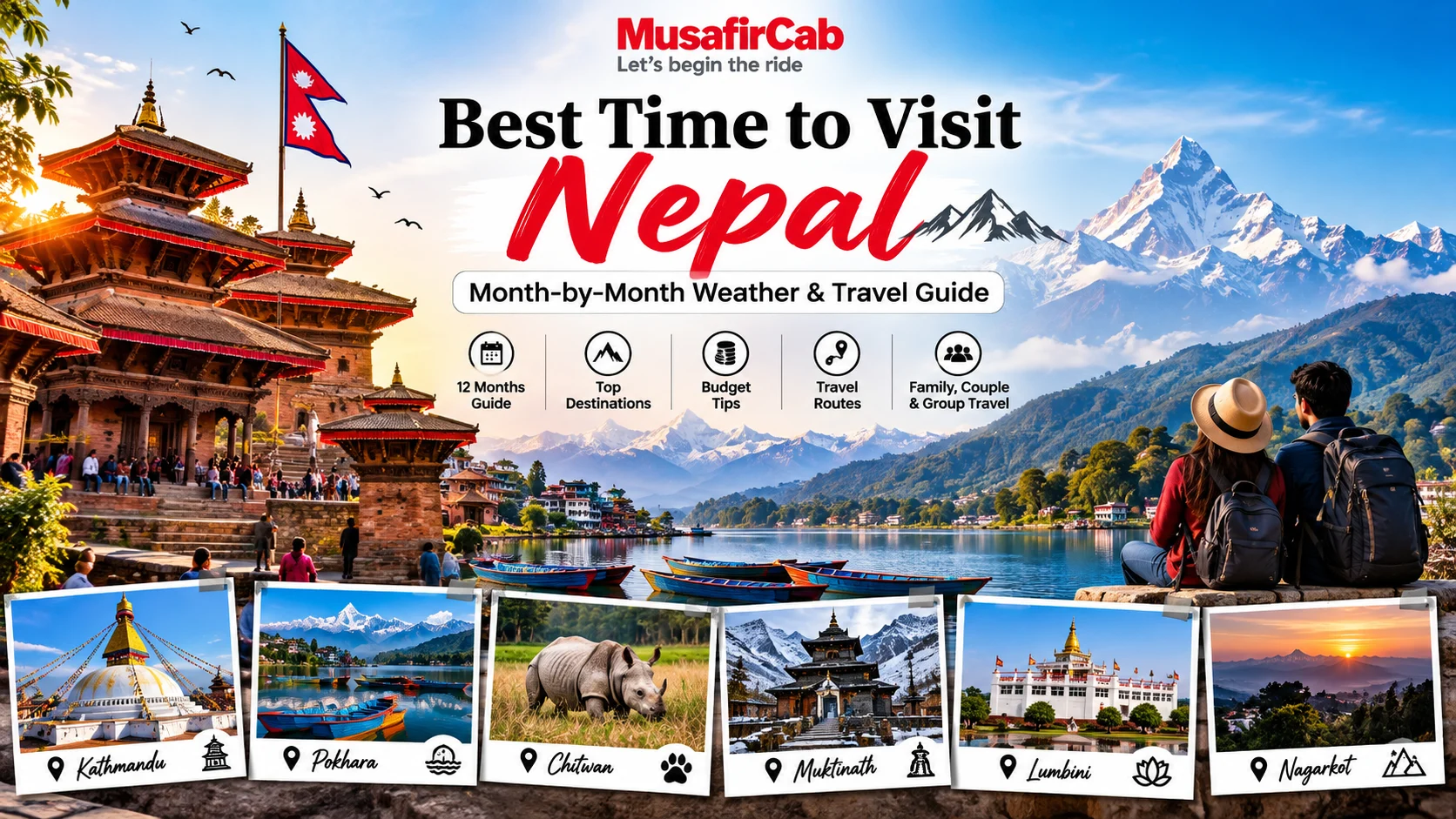
MUSAFIRCAB · NEPAL SEASONAL TRAVEL PLANNER
Best Time to Visit Nepal: Month-by-Month Weather & Travel Guide
For many first-time visitors, October–November and March–April are attractive periods for Kathmandu, Pokhara and mountain scenery. But the right month depends on your destination, road route, travel companions and tolerance for rain, heat or cold.
Find Your Travel Month Explore Nepal ToursWhen Is the Best Time to Visit Nepal?
Quick answer: October and November are popular for clearer post-monsoon conditions; March and April bring spring scenery. October–March is often more comfortable for Chitwan, while Muktinath needs separate road, altitude and weather checks. Nepal is not one climate zone: the southern plains, valleys and mountains behave differently.
| Travel goal | Usually favourable | Watch for |
|---|---|---|
| First Nepal trip | Oct–Nov, Mar–Apr | Festival demand, visibility variability |
| Pokhara views | Oct–Nov, Mar–Apr | Clouds and haze |
| Chitwan wildlife | Oct–Mar | Heat, safari access, no sighting guarantee |
| Muktinath pilgrimage | Consider Apr–May, Sep–Nov | Road access, altitude, cold and landslides |
| Budget holiday | Compare off-peak dates | Lower demand can coincide with poor weather |
Nepal Travel Month Finder
Choose a month, destination, purpose, starting city and available days. This tool gives seasonal planning advice only—it does not fetch current weather, live road access, fares or hotel availability.
For a personalised quote, confirm the actual travel date, child ages, hotel class and vehicle requirements with the team. The team will confirm the itinerary and quotation before booking.
Nepal's Four Travel Seasons Explained
Spring: March–May
Spring can be comfortable for Kathmandu, Pokhara and many outdoor routes. Rhododendrons appear on suitable trails, but haze, afternoon storms and increasing heat in Lumbini, Janakpur and Chitwan can affect plans. Trekking conditions depend on altitude and the particular trail.
Monsoon: June–September
Rain turns hills green but can disrupt mountain roads, domestic flights and outdoor activities. Monsoon onset and withdrawal vary by year. A flexible Kathmandu cultural holiday may work, but a fixed mountain-road itinerary deserves more caution. Mustang's rain-shadow geography does not remove risks on approach roads.
Autumn: October–November
Post-monsoon weather often brings clearer views, making this a popular period for Kathmandu, Pokhara and trekking. Festival demand can affect hotel prices, traffic and opening schedules. Clear skies are never guaranteed.
Winter: December–February
Lower-altitude cultural travel remains possible. Expect cold mornings and evenings, possible fog in the plains and snow or ice on higher routes. Check mountain access rather than assuming it stays open.
Nepal Month-by-Month Travel Guide
These descriptions are typical seasonal patterns, not live forecasts or fixed yearly guarantees.
January: Winter sightseeing
January is a good time to explore Kathmandu’s heritage squares, Pashupatinath and museums without relying on high-mountain access. Pokhara can have crisp mornings, but views depend on clouds; Chitwan is often comfortable for wildlife excursions. Fog can delay travel across the southern plains, and higher routes may be icy. Planning tip: Allow extra time for early-morning road transfers; pack warm layers. If a Gorakhpur road trip is planned, winter fog on the plains may make an early tight arrival unrealistic; keep the first night flexible rather than promising a same-day hill excursion.
February: Late-winter discoveries
February can be pleasant for Kathmandu walking tours and Chitwan nature stays, particularly later in the month. Pokhara’s mornings may remain chilly, while some hill areas begin to feel more spring-like. Do not treat improving valley weather as evidence that remote mountain roads are open. Planning tip: Build a Kathmandu–Pokhara itinerary with relaxed morning starts and check high-altitude access. For a mixed-age family, Kathmandu and Chitwan can be more manageable than a high-altitude pilgrimage; reserve a weather buffer before a return train.
March: Spring scenery and city walks
March is attractive for Kathmandu Valley temples, Pokhara lakeside stays and Nagarkot excursions. Hillside flowering begins at some elevations, though haze can reduce distant mountain views and afternoon showers are possible. Travellers arriving from India should still allow realistic driving days. Planning tip: Reserve preferred accommodation for popular dates; plan viewpoints flexibly. A Nagarkot sunrise can be paired with Kathmandu heritage sightseeing, but haze may reduce distant mountain visibility; do not sell a guaranteed panorama.
April: Flowers, hikes and warmer plains
April can bring rhododendron colour on suitable trails and comfortable hill-destination sightseeing, while Chitwan, Lumbini and Janakpur become noticeably hotter. Pokhara boating and outdoor activities depend on daily conditions. For Muktinath, check the entire approach route and altitude requirements before committing. Planning tip: Schedule southern-plains sightseeing early and carry water and sun protection. Choose morning slots for Lumbini or Janakpur temples and reserve strenuous hikes for suitable elevations; spring in Kathmandu does not mean cool afternoons in the Terai.
May: Warm days and changing skies
May is often hot in Nepal’s lowlands, so a temple-heavy itinerary through Lumbini or Janakpur benefits from morning visits and shaded breaks. Kathmandu and Pokhara remain possible, but afternoon cloud build-up and thunderstorms can change outdoor plans. Travellers should not assume mountain views throughout the day. Planning tip: Choose comfortable hotels and avoid tight afternoon activity schedules. For a short trip, prioritise one valley and a comfortable hotel rather than a hot, multi-stop plains circuit; leave flexibility for afternoon storms.
June: Monsoon transition
June often marks the development of monsoon conditions, although onset timing varies. Kathmandu’s cultural attractions can still work with rain-friendly alternatives, but long road journeys to hill destinations need contingency time. A fixed Pokhara–Jomsom–Muktinath plan is especially sensitive to changing approach-road conditions. Planning tip: Keep a spare day and confirm the exact highway before departure. If the monsoon arrives during your journey, a Kathmandu cultural stay with flexible indoor stops is easier to adapt than a fixed Pokhara–Jomsom mountain-road transfer.
July: Rainy-season flexibility
July frequently brings sustained rain to many parts of Nepal, lush landscapes and increased landslide risk on vulnerable roads. Consider a slower Kathmandu-based cultural holiday rather than multiple one-night mountain transfers. Rain may also affect visibility, flights and outdoor activities; a destination being reachable last week does not prove it is reachable today. Planning tip: Avoid tight road-to-flight connections and follow current official warnings. Avoid itineraries dependent on multiple same-day hill-road connections. A cancelled transfer can also affect prepaid hotels and the return journey.
August: Green hills, uncertain transfers
August can reward flexible travellers with vivid green scenery and quieter cultural experiences, but heavy showers may interrupt drives and activities. A short stay in one or two accessible destinations is usually easier to manage than an ambitious cross-country loop. Mustang’s drier geography does not remove landslide risks on access roads from Pokhara. Planning tip: Ask for route confirmation close to travel and retain a weather alternative. For Pokhara, plan lakeside and cultural alternatives for rainy days; river activities and mountain approaches need operator-led, current safety decisions.
September: The uncertain transition
September sits near the seasonal transition, yet monsoon withdrawal is not fixed to a date. Early September may still bring substantial rain, while later periods sometimes improve. Kathmandu and Pokhara can suit travellers with flexible schedules; avoid booking a mountain-road pilgrimage on the assumption that autumn conditions have already arrived. Planning tip: Check updated forecasts and keep a contingency night in your itinerary. Do not book an early-September Muktinath departure as though monsoon has ended. Compare the actual travel-week forecast and approach-road updates.
October: Autumn travel favourite
October is a popular choice for Kathmandu heritage touring, Pokhara scenery and many trekking routes as post-monsoon conditions often improve. However, cloud cover can still hide the Himalayas, and Dashain or other festival travel may affect transport and hotel availability. Muktinath requires its own access assessment. Planning tip: Book sought-after stays early and verify the actual festival calendar. Book desired hotels around the actual Dashain period, but check dates each year; holiday traffic and closures can change even when the weather is pleasant.
November: Scenic days, cooler mornings
November often suits travellers who want Kathmandu sightseeing, Pokhara mountain viewpoints and comfortable Chitwan visits. Skies may be clearer than during monsoon, though there is never a guaranteed panorama. Early mornings in Nagarkot and other hill locations can be cold; popular routes may still be busy. Planning tip: Pack layers for sunrise trips and give transfers enough daylight. A sunrise viewpoint can be worthwhile, yet colder early starts require layers. Plan the transfer to Chitwan with enough daylight for comfortable arrival.
December: Winter culture and calm
December is well suited to travellers happy with lower-altitude culture, food and heritage rather than a high-altitude road adventure. Kathmandu and Pokhara remain viable with warmer clothing, while Chitwan can be comfortable during the day. Southern-plains fog and short daylight hours may affect long drives; snow and ice can restrict mountain approaches. Planning tip: Keep daylight margins for driving and confirm winter access to remote sites. A Kathmandu–Pokhara culture trip is more predictable than a winter high-pass plan, but early road travel from India may still face fog delays.
| Month | General pattern | Practical decision |
|---|---|---|
| January | Winter sightseeing | Keep flexible transfer time and warm layers. |
| February | Late winter | Check higher-altitude access separately. |
| March | Spring begins | Book popular dates ahead. |
| April | Spring outdoors | Start outdoor sightseeing early. |
| May | Warm pre-monsoon | Avoid overpacked outdoor schedules. |
| June | Monsoon onset | Leave buffer days. |
| July | Wet-season travel | Avoid tight mountain-road connections. |
| August | Green monsoon | Follow official alerts. |
| September | Transition month | Do not assume September is fully dry. |
| October | Popular autumn | Confirm festival schedules and book ahead. |
| November | Autumn visibility | Carry warm layers. |
| December | Early winter | Check daylight and winter road access. |
Destination × Month Suitability Matrix
Use the interactive month selector to compare destinations. Labels are editorial guidance, not safety ratings or operational status.
Why Nepal's Weather Changes So Much by Region
Nepal does not have one nationwide travel temperature. The southern Terai, including Lumbini, Janakpur and Chitwan, is generally warmer than Kathmandu Valley. Pokhara has its own rainfall and cloud patterns, while high Himalayan areas can remain cold even when lowland sightseeing feels pleasant.
| Region | What travellers should expect | Practical decision |
|---|---|---|
| Terai plains | Hotter pre-monsoon afternoons, humid rainy months, and possible winter fog | Plan temple visits early in hot weather; leave road buffers during fog. |
| Kathmandu Valley | Cooler winter mornings, spring warmth and rainy-season showers | Keep indoor heritage options for wet afternoons. |
| Pokhara and nearby hills | Mountain views depend on daily cloud, haze and rainfall | Allow more than one chance for a viewpoint if scenery matters. |
| Jomsom–Muktinath approach | Altitude, wind, cold and access-road constraints vary by route and date | Verify the entire approach road and overnight plan; do not rely on month alone. |
Best Time to Visit Nepal by Destination
Kathmandu
March–April and October–November suit many heritage-focused trips. Temples, museums and cultural visits remain possible in other seasons with weather-aware scheduling.
Pokhara
October–November and spring are attractive for Annapurna views and lakeside sightseeing. Rain and cloud can hide the mountains even in otherwise favourable periods.
Chitwan
October–March is generally more comfortable for nature activities. Safari operations, weather and wildlife sightings remain variable.
Muktinath
Investigate April–May or autumn dates, but confirm the Pokhara–Jomsom approach, altitude considerations, weather and any relevant permits before paying.
Lumbini & Janakpur
October–March can feel more comfortable than hot late spring in the southern plains. Pilgrimage timings and festival crowds matter too.
Nagarkot
Autumn and spring offer opportunities for sunrise views, not guarantees. An overnight stay is often more relaxed than a rushed early-morning transfer.
Best Season for Families, Couples, Seniors and Adventure
Families with children
Spring and autumn are often convenient for Kathmandu and Pokhara. Prioritise fewer transfers, hotel location, meal breaks and child-friendly activities over a crowded checklist.
Couples and honeymoon travellers
Autumn and spring are popular for lakeside scenery and mountain views; winter can work for quieter lower-altitude stays. A mountain-view room does not guarantee a mountain view.
Senior travellers
Consider moderate temperatures, step-free hotel access, rest days and realistic drive times. Muktinath needs particular altitude and access planning; seek individual medical guidance where appropriate.
Trekking and adventure
Spring and autumn favour many routes, but conditions differ by elevation and trail. Paragliding, rafting and mountain flights require suitable operational weather and may be cancelled.
Wildlife visitors
Chitwan has a different climate from Kathmandu. Comfortable months can improve the experience, but wildlife sightings are never promised.
Seasonal Nepal Road Trips from India
Gorakhpur → Sonauli → Nepal
Useful for Lumbini, Pokhara and Kathmandu circuits. Spring and autumn often suit sightseeing, while monsoon rain can slow hill-road sections. Explore the Gorakhpur to Nepal package.
Raxaul → Birgunj → Nepal
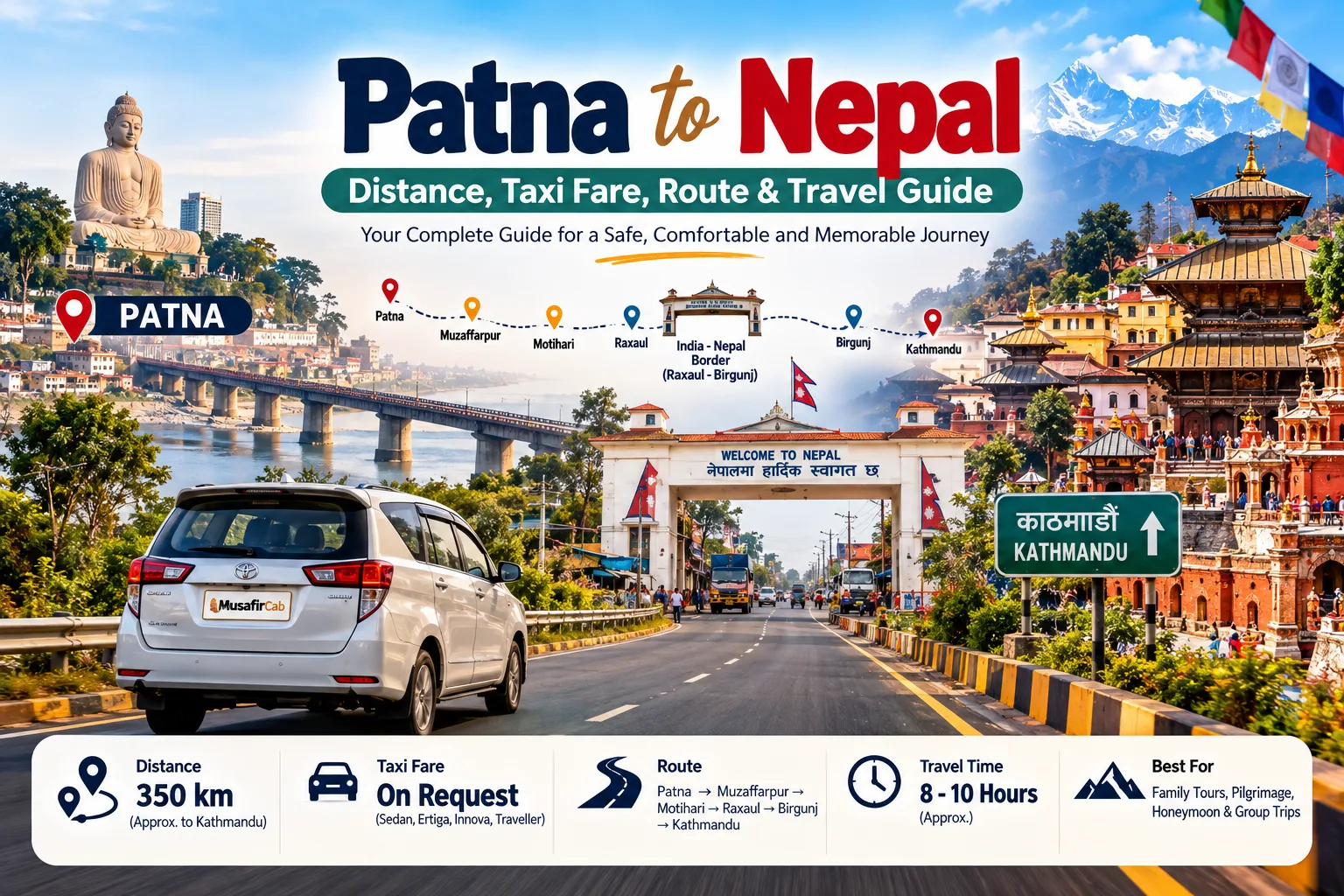
Choose the onward route based on destination and realistic drive time, not just border distance. Keep spare time during rainy periods. See the Raxaul to Nepal package.
Darbhanga → Nepal
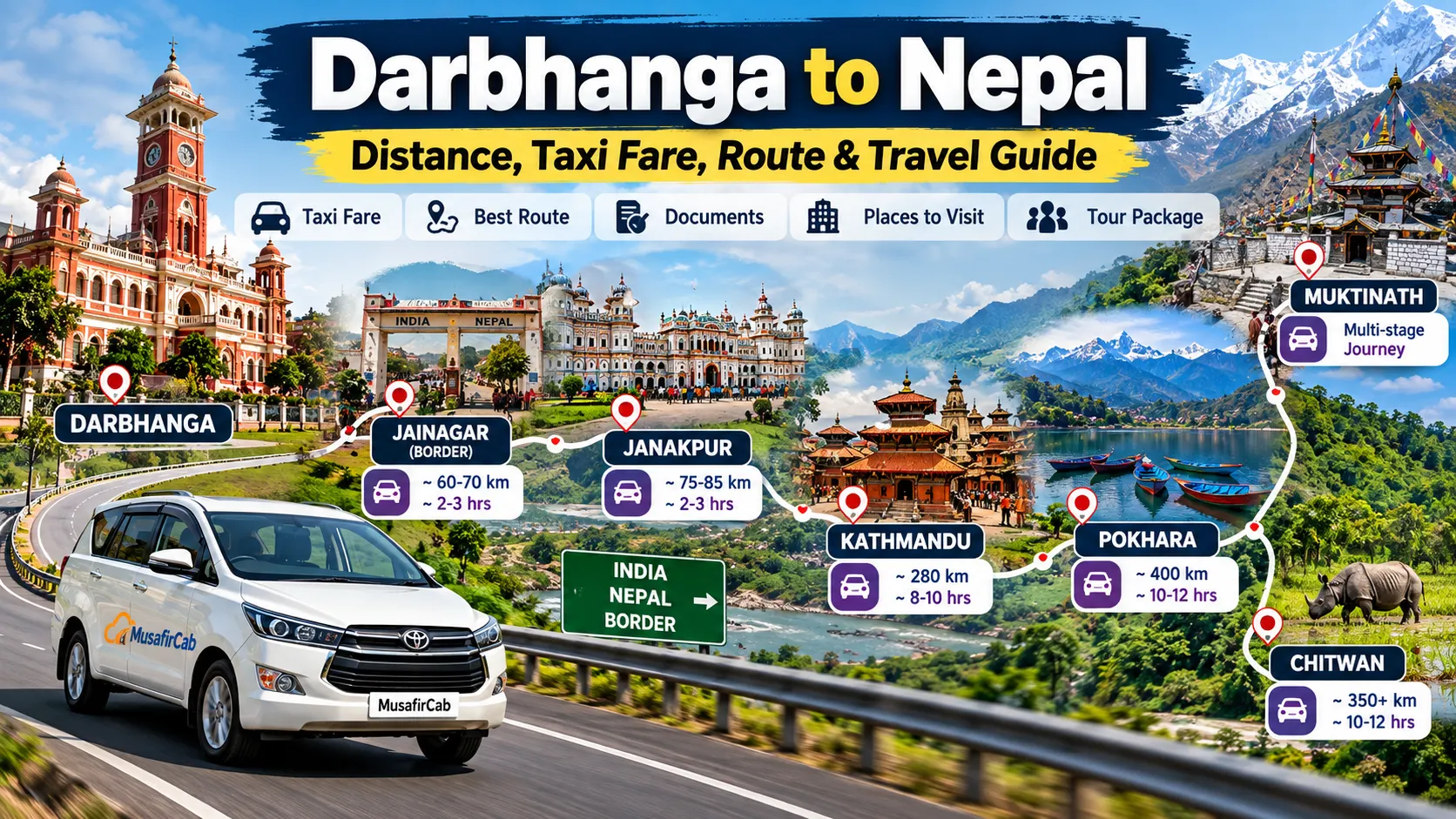
Janakpur may be relevant depending on the border crossing and chosen circuit. Summer heat in the plains differs from weather in Kathmandu. See the Darbhanga to Nepal package.
Varanasi, Ayodhya and longer Indian origins
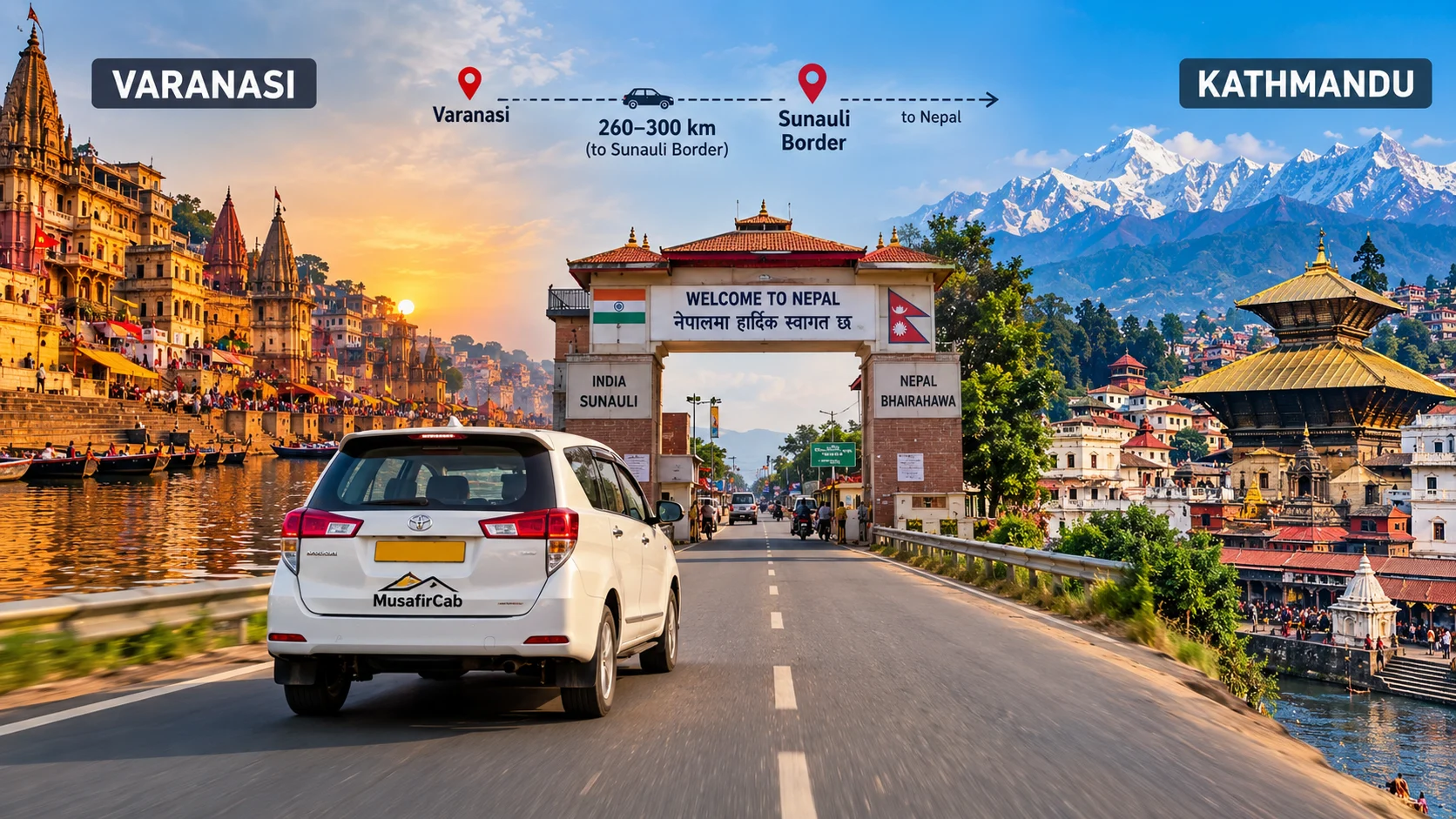
Include the Indian approach journey in the total holiday duration. A short trip from a distant city may work better with fewer Nepal destinations or a flight.
Pokhara → Jomsom → Muktinath
Never infer that a rain-shadow destination guarantees an open approach road. Check the actual route, suitable vehicle, weather and overnight arrangements. For disruptions, keep a Kathmandu or Pokhara-based alternative rather than forcing an unsafe mountain transfer.
Route planning examples—not confirmed drive times
Gorakhpur entry: A Lumbini stop followed by Pokhara usually needs a dedicated travel day and a realistic border/road buffer; do not assume sightseeing time is guaranteed after a long transfer.
Raxaul entry: Birgunj access may suit Kathmandu-oriented journeys, but the chosen onward highway and traffic conditions matter more than border-to-border distance.
Muktinath: A Pokhara–Jomsom–Muktinath plan should not depend on a single rigid day without a current route assessment and suitable accommodation. If access is unsuitable, postpone that segment rather than forcing it.
How Many Days Should You Plan?
| Available days | More realistic starting point | Watch out for |
|---|---|---|
| 2–3 | One destination near your arrival point | Long cross-country transfers |
| 4–5 | Kathmandu-focused or compact border circuit | Trying to cover Kathmandu and Pokhara fully from a distant origin |
| 6–7 | Kathmandu + Pokhara with planned travel days | Weather delays and long road days |
| 8–10+ | Kathmandu + Pokhara + Chitwan, if route permits | Too many one-night hotel changes |
Sample five-day Kathmandu arrival itinerary
- Arrival, hotel check-in and relaxed evening.
- Pashupatinath, Boudhanath and nearby attractions.
- Kathmandu Valley heritage sightseeing.
- Flexible excursion or cultural day.
- Departure transfer.
Sample seven-day Kathmandu–Pokhara itinerary
- Kathmandu arrival.
- Kathmandu sightseeing.
- Transfer to Pokhara.
- Pokhara sightseeing.
- Optional activities or weather buffer.
- Return to Kathmandu.
- Departure.
These examples begin at Kathmandu. Road arrivals from India require a separately paced itinerary.
Documents and Practical Checks for Indian Travellers
Indian citizens should confirm acceptable identity and travel documents using the current Embassy of India guidance. Requirements can differ for air travel, children and travellers of other nationalities. Do not assume an Aadhaar card is accepted for every travel situation.
Before departure, verify hotel confirmations, any relevant route permits, travel insurance coverage, the vehicle arrangement, the planned border crossing and the return connection. For Muktinath or trekking, confirm the latest applicable permits with the operator and relevant authorities.
Best Time to Visit Nepal on a Budget
There is no universally cheapest month. Festival dates, hotel demand, transport, group size and weather affect costs. Quieter periods may offer options but can also bring rain-related disruption or reduced activities.
| Travel period | Possible price influence | Trade-off |
|---|---|---|
| Popular autumn dates | Higher demand for some hotels and vehicles | Popular sightseeing conditions |
| Spring holidays | Demand for scenic and trekking trips | Increasing heat in the plains |
| Monsoon/off-peak dates | Potential offers in some locations, not guaranteed | Road and activity disruption |
| Winter | Varies by destination and holiday dates | Cold, fog and mountain access limitations |
For transparent planning estimates, use the Nepal Trip Cost from India guide. No live hotel, flight or taxi price is quoted on this page.
Seasonal Nepal Packing Checklist
Choose your travel month in the planner to generate a personalised starting checklist. Regardless of season, pack valid travel documents, medicines, comfortable footwear, charging equipment and weather-appropriate layers.
Festival Dates, Visibility and Common Mistakes
Dashain and Tihar generally fall around autumn but their Gregorian dates change annually. Festival travel can bring special experiences as well as altered transport schedules, crowding and hotel demand. Confirm actual dates for your travel year rather than hard-coding them into an evergreen page.
- Do not assume October guarantees mountain views.
- Do not assume September is always dry.
- Do not treat Mustang's rain shadow as proof that approach roads are safe.
- Do not schedule a long drive and a tight flight connection on the same day.
- Do not assume every activity operates in every season.
- Do not plan a mountain pilgrimage based only on average monthly weather.
What to do if weather disrupts your trip
Prioritise safety over completing every attraction. Ask the operator to check route access and propose a lower-altitude cultural day, an additional Pokhara/Kathmandu night, or a revised sequence. Changes may affect hotel and transport costs.
Frequently Asked Questions
Which month is best to visit Nepal?
October–November and March–April are popular all-round choices, but the best month depends on your destination and travel purpose.
Is October guaranteed to have clear Himalayan views?
No. Autumn often improves visibility, but cloud, haze and weather can still obstruct views.
Is March good for a Nepal family holiday?
March is often suitable for Kathmandu and Pokhara, with sensible travel pacing and weather checks.
Can I visit Nepal in July?
Yes, especially for flexible cultural travel, but heavy rain and transport disruptions may affect plans.
Is September a dry month in Nepal?
Not reliably. Monsoon withdrawal varies by year and rain may persist.
What is the best season for Pokhara?
Autumn and spring are popular for scenery; visibility and outdoor activities remain weather-dependent.
When should I visit Chitwan?
October–March is generally comfortable for many wildlife-oriented trips, but sightings and safari access are not guaranteed.
What is the best time for Muktinath?
Consider suitable spring or autumn windows, then verify road access, weather, altitude and any permit needs.
Can seniors visit Nepal in winter?
Lower-altitude sightseeing may be possible; check cold conditions, mobility needs and individual medical considerations.
Are monsoon tour packages cheaper?
Sometimes certain services have lower demand, but prices are not universally cheaper and weather-related changes can add cost.
When should I book autumn Nepal hotels?
Book early for preferred hotels and major festival periods; availability varies.
Which month is best for a Nepal honeymoon?
October–November and March–April are popular for scenery, but the ideal season depends on activities and hotel preferences.
Can I do Kathmandu and Pokhara in five days?
Sometimes, particularly with efficient arrival and departure plans, but a seven-day itinerary often feels less rushed.
Are Nepal mountain roads open throughout the year?
No universal guarantee applies. Access depends on the exact road, weather and current conditions.
Does this tool show live weather or prices?
No. It offers typical seasonal guidance and does not access live weather, road status, hotel availability or fares.
Can I use Aadhaar for Nepal travel?
Do not assume Aadhaar is sufficient for every journey. Check the current Embassy of India guidance and the rules of your airline or transport provider before departure.
Does the best travel month guarantee that the road to Muktinath is open?
No. Seasonal patterns cannot confirm a particular road’s condition. Ask for a current approach-road check, suitable vehicle and a safe alternate plan before booking.
Sources, Method and Editorial Transparency
This guide describes typical travel-season patterns in Nepal, not live weather, border waiting times, road opening, hotel inventory or a confirmed quote. Recommendations distinguish the Terai plains, central valleys and higher Himalayan routes. Actual conditions change by location and date.
How to use this guide: First select a month and destination; then check the current forecast, relevant road notices, local activity operations and your operator’s written itinerary before paying. We do not claim that a favourable month guarantees clear mountain views or safe high-altitude road access.
- Nepal Department of Hydrology and Meteorology — official weather bulletins and outlooks.
- Nepal Tourism Board — destination and visitor guidance.
- Embassy of India in Kathmandu — Indian traveller document guidance; verify current requirements.
Editorial review: MusafirCab Travel Team. Written by Vijay Yadav (see the author profile below this article). Seasonal advice is reviewed against official sources; check current notices before departure.
Plan Your Nepal Tour with MusafirCab
Share your travel month, starting city, number of travellers, trip duration and destination to request a personalised route and price. A seasonal recommendation is not a confirmed quotation.