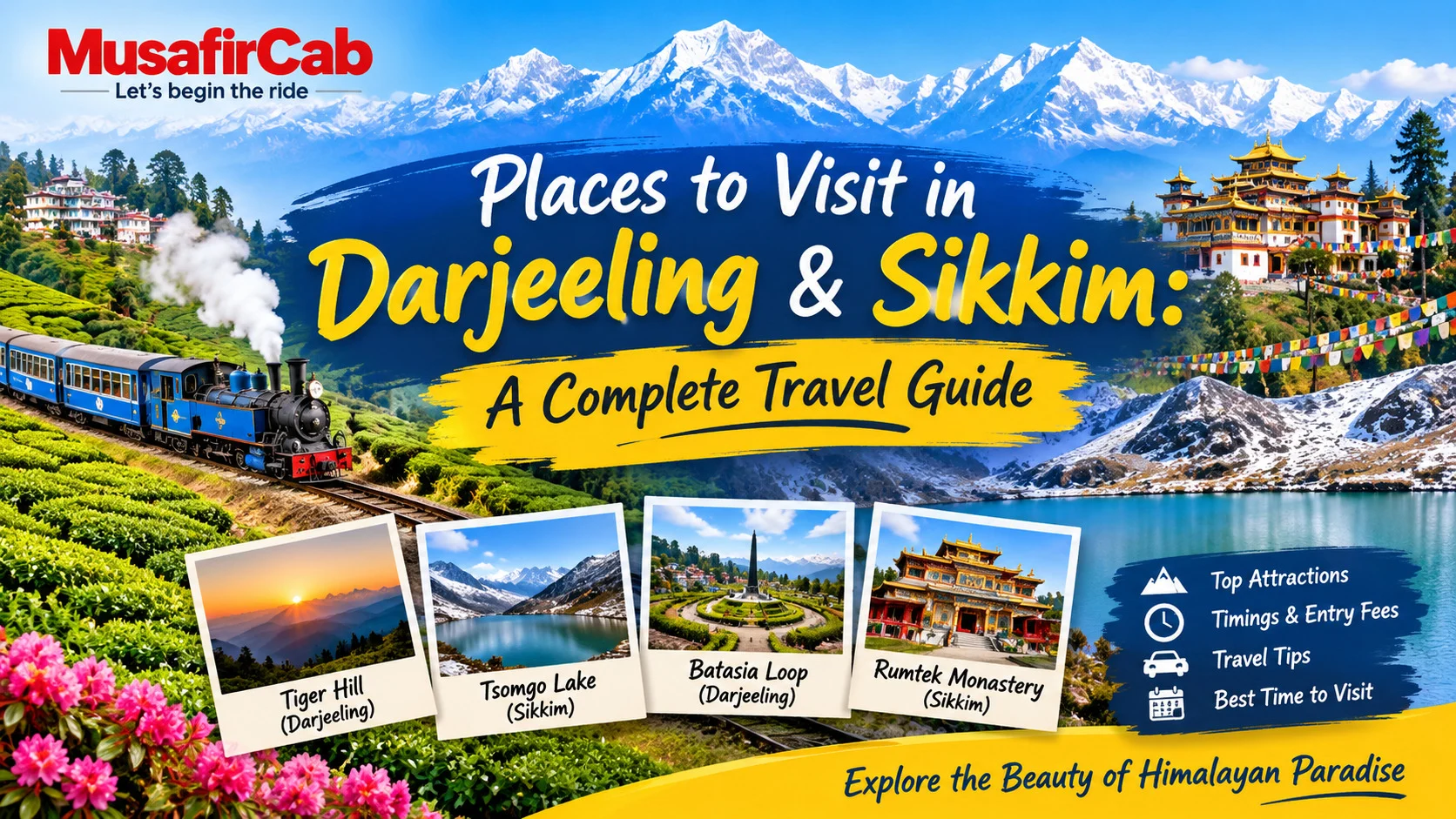
Darjeeling and Sikkim are two beautiful destinations in the eastern Himalayas, known for their snow-covered mountains, peaceful monasteries, tea gardens, beautiful lakes and scenic roads. Whether you enjoy nature, adventure, photography or cultural experiences, these destinations offer plenty of places to explore.

Darjeeling is famous for its breathtaking views of Mount Kanchenjunga, the historic toy train, green tea estates and colonial charm. Sikkim, on the other hand, attracts travellers with its high-altitude lakes, mountain valleys, Buddhist monasteries and beautiful villages.
If you are planning a holiday to these destinations, knowing the best places to visit, their opening and closing times, entry fees, travel distances and the best time to explore can make your journey easier.
This guide covers the major tourist attractions in Darjeeling and Sikkim, along with practical information to help you plan your sightseeing.
1. Best Places to Visit in Darjeeling
Darjeeling is situated in West Bengal at an altitude of approximately 2,045 metres. It is one of India's most popular hill stations and offers a mixture of natural beauty, heritage attractions and local experiences.
1. Tiger Hill
Tiger Hill is one of the most famous sightseeing spots in Darjeeling. It is especially popular for its sunrise views over the Himalayan mountain range. On a clear morning, visitors can see the first sunlight falling on Mount Kanchenjunga, creating a beautiful golden view.

The viewpoint is also known for distant views of Mount Everest when weather conditions are favourable.
-
Location: Approximately 11 km from Darjeeling town.
-
Opening time: Usually accessible from around 4:00 AM.
-
Closing time: Generally around sunset; sunrise visits are the main attraction.
-
Entry fee: Local entry or vehicle charges may apply.
-
Best time to visit: October to December and March to May.
-
Time required: 1–2 hours.
-
Things to do: Watch sunrise, enjoy mountain views and take photographs.
Travel tip: Leave your hotel early because many visitors reach Tiger Hill before sunrise. Carry warm clothes, as mornings can be extremely cold.
2. Batasia Loop
Batasia Loop is a beautiful railway attraction where the Darjeeling Himalayan Railway makes a circular turn while climbing the hills. The place is surrounded by landscaped gardens and offers lovely views of the surrounding mountains.

There is also a Gorkha War Memorial dedicated to Gorkha soldiers.
-
Location: Around 5 km from Darjeeling town.
-
Opening time: Approximately 5:00 AM.
-
Closing time: Approximately 8:00 PM.
-
Entry fee: A small entry fee may apply.
-
Best time to visit: Morning hours for clear mountain views.
-
Time required: 30–60 minutes.
-
Things to do: Enjoy the toy train view, visit the memorial and explore the garden.
Travel tip: Combine Batasia Loop with Tiger Hill because both attractions are located along a similar sightseeing route.
3. Darjeeling Himalayan Railway (Toy Train)
The Darjeeling Himalayan Railway is one of the most special experiences in the region. This narrow-gauge railway is recognised as a UNESCO World Heritage Site and is popularly known as the Toy Train.

The train passes through mountain landscapes, old railway stations, small markets and beautiful hill settlements. The Darjeeling to Ghum joyride is especially popular among tourists.
-
Location: Darjeeling Railway Station.
-
Operating time: Depends on the scheduled train and season.
-
Closing time: No fixed attraction closing time; services follow the railway timetable.
-
Ticket price: Depends on the train, class and journey.
-
Best time to visit: March to May and October to December.
-
Time required: Approximately 2 hours for a popular joyride, depending on the service.
-
Things to do: Enjoy the heritage train journey, mountain scenery and railway photography.
Travel tip: Book tickets in advance during weekends, holidays and peak tourist seasons.
4. Padmaja Naidu Himalayan Zoological Park
The Padmaja Naidu Himalayan Zoological Park is a popular attraction for families and wildlife lovers. It is known for conservation programmes involving endangered Himalayan species.

Visitors may see red pandas, snow leopards, Himalayan wolves and other mountain animals, depending on availability and animal viewing conditions.
-
Location: Jawahar Parbat, Darjeeling.
-
Opening time: Generally 8:30 AM.
-
Closing time: Generally 4:30 PM.
-
Weekly closure: Thursday is generally the weekly closing day.
-
Entry fee: Separate tickets may apply for the zoo and associated attractions.
-
Best time to visit: Morning.
-
Time required: 1.5–2 hours.
Travel tip: The zoo is located near the Himalayan Mountaineering Institute, so you can explore both attractions during the same visit.
6. Happy Valley Tea Estate
Darjeeling is internationally famous for its tea, and Happy Valley Tea Estate is a wonderful place to understand how this famous beverage is produced.

Visitors can explore tea gardens, learn about tea processing and enjoy the beautiful green surroundings. Tea factory visits and tasting experiences may be available depending on the season and operating arrangements.
-
Location: Approximately 3 km from Darjeeling town.
-
Opening time: Usually around 9:00 AM.
-
Closing time: Around 4:00–5:00 PM, depending on visitor facilities.
-
Entry fee: Garden access and guided factory visits may have different charges.
-
Best time to visit: March to May and June to September, depending on tea production and garden conditions.
-
Time required: 1–2 hours.
Travel tip: Ask about factory tour availability before visiting, as tea production and visitor access can change with the season.
7. Peace Pagoda
The Japanese Peace Pagoda is a peaceful attraction located on the slopes of Darjeeling. It was built to promote peace and harmony and is known for its beautiful white architecture and Buddhist sculptures.

The surroundings provide a calm atmosphere, making it a lovely place for meditation, photography and quiet sightseeing.
-
Location: Jalapahar, Darjeeling.
-
Opening time: Approximately 4:30 AM.
-
Closing time: Approximately 7:00 PM.
-
Entry fee: Generally free.
-
Best time to visit: Morning and late afternoon.
-
Time required: 30–60 minutes.
9. Darjeeling Ropeway
The Darjeeling Ropeway offers a wonderful aerial view of tea gardens, green valleys and mountain landscapes. It is a good experience for travellers who want to see the natural beauty of Darjeeling from above.

-
Location: Singamari, Darjeeling.
-
Operating time: Generally around 10:00 AM to 4:00 PM.
-
Closing time: May change according to weather and season.
-
Ticket price: Depends on the current ticket category.
-
Best time to visit: Clear mornings and afternoons.
-
Time required: Approximately 1–2 hours, including waiting time.
Travel tip: Strong winds, heavy rain and technical maintenance can affect ropeway services. Check the operating status before travelling.
2. Best Places to Visit in Sikkim
Sikkim is a beautiful Himalayan state known for its snow-covered peaks, Buddhist monasteries, alpine lakes, waterfalls and peaceful mountain villages. Gangtok is the main tourist hub, while North Sikkim, South Sikkim and West Sikkim offer different travel experiences.
1. Tsomgo Lake (Changu Lake)
Tsomgo Lake is one of the most beautiful natural attractions in Sikkim. Located at approximately 12,400 feet above sea level, this glacial lake is surrounded by high mountains and changes its appearance according to the season.

During winter, the lake may freeze, while spring brings colourful flowers to the surrounding landscape. Visitors can also enjoy decorated yak rides and local food stalls.
-
Location: Approximately 38 km from Gangtok.
-
Altitude: Around 12,400 feet.
-
Opening time: Government-listed attraction timings are generally 10:00 AM–4:00 PM.
-
Closing time: Around 4:00 PM, subject to weather and access restrictions.
-
Entry fee: No ordinary sightseeing ticket is the main requirement; a special travel permit is compulsory.
-
Best time to visit: March to May and October to December, subject to road conditions.
-
Time required: 1–2 hours at the lake.
-
Activities: Yak rides, photography, enjoying mountain scenery and trying local snacks.
Important: Tsomgo Lake is a restricted-area destination. Visitors need the appropriate permit. Foreign visitors have additional conditions, including group and agency requirements.
India+2
2. Nathula Pass
Nathula Pass is one of the most famous attractions in East Sikkim. It is a high-altitude mountain pass located near the India-China border and was historically part of an important trade route between India and Tibet.

The journey itself is memorable because the road passes through beautiful mountain landscapes and high-altitude terrain.
-
Location: Approximately 56 km from Gangtok.
-
Altitude: Around 14,140 feet.
-
Opening days: Generally Tuesday to Sunday; Monday is usually a no-visit day.
-
Opening time: Around 8:00 AM, subject to the official schedule.
-
Closing time: Around 5:00 PM.
-
Entry fee: Permit and applicable environmental charges.
-
Best time to visit: April to June and October to November.
-
Time required: A full-day excursion from Gangtok.
-
Activities: Mountain photography, viewing the border area and enjoying the Himalayan landscape.
Important travel information:
-
Nathula Pass is open to eligible Indian visitors with the required permit.
-
Foreign nationals are not permitted to visit Nathula.
-
Permits should be arranged through an authorised travel agency.
-
Access depends on weather, road conditions and security clearance.
Check the latest permit information before planning your journey.
Sikkim Government+2
3. Baba Harbhajan Singh Mandir
Baba Harbhajan Singh Mandir is a well-known shrine located in the mountains between Nathula Pass and the surrounding high-altitude areas. It is associated with the story of Indian Army soldier Harbhajan Singh and is visited by tourists and devotees.

The shrine has historical and emotional importance for many Indian Army personnel. Its location also makes it a popular stop during the Gangtok–Tsomgo–Nathula sightseeing route.
-
Location: East Sikkim, on the Nathula sightseeing circuit.
-
Opening time: Generally during daytime sightseeing hours.
-
Closing time: Depends on security and local access arrangements.
-
Entry fee: Generally no separate temple entry fee.
-
Best time to visit: April to June and October to November.
-
Time required: 30–45 minutes.
-
Things to do: Visit the shrine, learn about the soldier's story and enjoy the mountain surroundings.
Travel tip: Visit along with Tsomgo Lake and Nathula Pass rather than planning a separate trip from Gangtok.
4. MG Marg, Gangtok
MG Marg is the heart of Gangtok and one of the best places to experience the local lifestyle. This pedestrian-friendly street is lined with restaurants, cafés, shops and souvenir stores.

It is a great place to spend an evening after sightseeing. You can try local food, shop for souvenirs and enjoy the lively atmosphere.
-
Location: Central Gangtok.
-
Opening time: Shops generally open around 9:00–10:00 AM.
-
Closing time: Many shops close around 8:00–9:00 PM.
-
Entry fee: Free.
-
Best time to visit: Evening.
-
Time required: 1–2 hours.
-
Things to do: Shopping, eating momos, trying thukpa, visiting cafés and taking photographs.
Travel tip: Vehicles are restricted from the main pedestrian stretch, making it suitable for a relaxed family walk.
5. Rumtek Monastery
Rumtek Monastery is one of the most important Buddhist monasteries in Sikkim. It is known for its traditional Tibetan architecture, prayer halls, religious paintings and peaceful surroundings.
The monastery is an important centre of the Karma Kagyu tradition of Tibetan Buddhism. Visitors can explore its architecture and learn about Buddhist culture and traditions.
-
Location: Approximately 23 km from Gangtok.
-
Opening time: Around 8:00 AM.
-
Closing time: Around 5:00 PM.
-
Entry fee: Generally no entry charge, but donations may be welcomed.
-
Best time to visit: Morning.
-
Time required: 1–1.5 hours.
-
Things to do: Explore the monastery, admire traditional architecture and understand Buddhist culture.
India+1
6. Enchey Monastery
Enchey Monastery is a peaceful Buddhist religious site located on a hill above Gangtok. It is surrounded by greenery and offers a calm atmosphere away from the busy streets of the city.

The monastery belongs to the Nyingma tradition of Tibetan Buddhism. Its colourful prayer flags, traditional paintings and peaceful prayer hall make it an interesting place for visitors.
-
Location: Around 3 km from Gangtok town.
-
Opening time: Approximately 6:00 AM.
-
Closing time: Approximately 4:00–5:00 PM.
-
Entry fee: Generally free.
-
Best time to visit: Morning.
-
Time required: 30–60 minutes.
-
Things to do: Visit the prayer hall, observe Buddhist traditions and enjoy the peaceful surroundings
Yumthang Valley
Yumthang Valley is popularly known as the Valley of Flowers of Sikkim. It is one of the most beautiful natural destinations in North Sikkim, surrounded by mountains, rivers and seasonal flowering plants.

During spring, the valley becomes colourful with blooming rhododendrons and other alpine flowers. In winter, snowfall can transform the landscape into a white mountain destination.
-
Location: Approximately 25 km from Lachung.
-
Altitude: Around 11,800 feet.
-
Opening time: Daytime access, subject to permits and local conditions.
-
Closing time: Depends on the local access schedule.
-
Entry fee: Permit and applicable charges may apply.
-
Best time to visit: April to June for flowers; winter for snow, when access is possible.
-
Time required: 2–3 hours at the valley.
-
Things to do: Nature photography, enjoy mountain scenery, see seasonal flowers and relax near the river.
Travel tip: Stay overnight in Lachung before visiting Yumthang. The road journey and high altitude require proper planning.
12. Pelling Skywalk and Chenrezig Statue
Pelling is a beautiful hill destination in West Sikkim, known for its peaceful surroundings and impressive views of the Kanchenjunga range.

The Pelling Skywalk is one of its popular attractions. Visitors can walk on a glass-floored viewing platform and admire the surrounding mountain scenery. The nearby giant Chenrezig statue makes the attraction even more special.
-
Location: Pelling, West Sikkim.
-
Opening time: Generally 8:00 AM.
-
Closing time: Generally 4:00 PM.
-
Entry fee: Ticket charges apply; check the current rates locally.
-
Best time to visit: October to May, depending on weather.
-
Time required: 1–1.5 hours.
-
Things to do: Walk on the glass platform, explore the statue complex and enjoy mountain views.
15. Khecheopalri Lake
Khecheopalri Lake is a sacred natural lake in West Sikkim. Surrounded by thick forests, it is known for its peaceful environment and religious significance.

Many visitors come here to enjoy the natural surroundings and experience the spiritual atmosphere. The lake is also recognised for its ecological importance as a Ramsar wetland site.
-
Location: Near Pelling, West Sikkim.
-
Opening time: Daytime visitor access.
-
Closing time: Depends on local arrangements.
-
Entry fee: A small local entry or maintenance charge may apply.
-
Best time to visit: March to May and October to November.
-
Time required: 45 minutes to 1 hour.
-
Things to do: Nature photography, peaceful walks and visiting the nearby religious areas.
Best Time to Visit Darjeeling and Sikkim
Choosing the right season can make a big difference to your travel experience. Darjeeling and Sikkim have different weather conditions depending on their altitude and location.
|
Season |
Months |
What to expect |
|---|---|---|
|
Spring |
March–May |
Pleasant weather, flowers and green landscapes |
|
Summer |
June–August |
Frequent rain, mist and possible landslides |
|
Autumn |
September–November |
Clear mountain views and comfortable sightseeing |
|
Winter |
December–February |
Cold weather and snowfall in higher areas |
Best overall months: March to May and October to November are generally good choices for sightseeing.
- For snowfall: December to February, depending on location and road access.
- For flowers: April to June, particularly in Yumthang Valley.
- For mountain photography: October and November generally offer clearer skies.
- For tea gardens: Spring and the main tea-plucking seasons offer interesting experiences.
Avoid planning high-altitude travel without checking weather and road conditions, especially during the monsoon.
How to Reach Darjeeling and Sikkim
Both destinations are accessible by road, rail and air, although the final journey usually involves travelling through mountain roads.
By Air
The nearest major airport for Darjeeling and Gangtok is Bagdogra Airport in West Bengal.
-
Nearest airport: Bagdogra Airport (IXB).
-
Darjeeling distance: Approximately 70 km.
-
Gangtok distance: Approximately 125 km, depending on the route.
-
Transport: Private taxi, shared vehicle or pre-booked cab.
Pakyong Airport is another option for Gangtok, but flight availability can be limited and weather-dependent.
By Train
New Jalpaiguri (NJP) Railway Station is the main railway connection for travellers visiting Darjeeling and Sikkim.
-
Nearest major railway station: New Jalpaiguri.
-
Darjeeling distance: Approximately 70–75 km.
-
Gangtok distance: Approximately 115–125 km.
-
Transport: Taxi, shared cab or private vehicle.
The Darjeeling Himalayan Railway toy train is also a popular experience for visitors already travelling in Darjeeling.
By Road
Darjeeling and Sikkim are connected through road networks from Siliguri, NJP and nearby towns.
Travellers can hire private taxis, SUVs or other suitable vehicles depending on the route. Mountain roads include sharp turns and steep climbs, so experienced hill drivers are recommended.
Permits Required for Visiting Sikkim
Some of Sikkim's most beautiful tourist attractions are located in restricted or protected areas. Visitors must arrange the appropriate permits before travelling.
Here are some important points:
-
Tsomgo Lake: A special permit is required.
-
Nathula Pass: Permits are available for eligible Indian nationals; foreign nationals are not permitted.
-
Baba Mandir: Access is subject to the applicable protected-area and route permissions.
-
North Sikkim: Additional permits are required for destinations such as Lachung, Lachen and Yumthang.
-
Gurudongmar Lake: Special travel permissions and local security requirements apply.
You can check the latest requirements through the official Sikkim Tourism permit portal.
Sikkim Government+2
Documents generally needed for Indian visitors:
-
Valid government-approved photo identification.
-
Passport-size photographs, where required.
-
Vehicle and driver details for permit processing.
-
Any additional documents requested by the issuing authority.
Carry original identification documents and check the current accepted-document list before departure.
Essential Planning Tips for Darjeeling & Sikkim
-
Best Seasons: Post-monsoon autumn months (around October to November) and spring (around March to May) generally offer clearer mountain visibility and smoother road conditions than the heavy monsoon season.
-
Build Buffer Time: Mountain drives take longer than distance alone suggests due to winding roads, mist, or seasonal maintenance, so keep schedules flexible.
-
Carry Cash & IDs: Keep physical IDs handy for checkpoints and permits, and carry some cash for smaller entry fees, local snacks, or taxis where digital payments may be spotty.
Are you planning this trip for a specific month or travel style (such as a relaxed family itinerary, photography, or culture), so I can help tailor a day-by-day plan?
How Many Days Are Enough for Darjeeling and Sikkim?
The number of days depends on how many places you want to explore and whether you plan to include North or West Sikkim.
|
Trip duration |
Suggested coverage |
|---|---|
|
3–4 days |
Darjeeling and nearby attractions |
|
5–6 days |
Darjeeling and Gangtok |
|
7–8 days |
Darjeeling, Gangtok and selected nearby attractions |
|
9–10 days |
Darjeeling, Gangtok and Pelling |
|
11–12 days |
Darjeeling, Gangtok, Lachung and Yumthang |
|
13–15 days |
Darjeeling and a more extensive Sikkim sightseeing trip |
For first-time visitors, 7–10 days is a comfortable starting point if you want to explore Darjeeling, Gangtok and Pelling without covering too many places in a hurry.
12. Frequently Asked Questions (FAQs)
Q1. Which are the most famous places to visit in Darjeeling?
Tiger Hill, Batasia Loop, Darjeeling Himalayan Railway, Padmaja Naidu Himalayan Zoological Park, Happy Valley Tea Estate, Peace Pagoda and Rock Garden are among the most popular attractions.
Q2. Which are the best places to visit in Sikkim?
Tsomgo Lake, Nathula Pass, Yumthang Valley, Gurudongmar Lake, Rumtek Monastery, Pelling Skywalk, Buddha Park and Khecheopalri Lake are popular tourist destinations.
Q3. What is the best month to visit Darjeeling and Sikkim?
March to May and October to November are generally good months for sightseeing, pleasant weather and mountain views.
Q4. Can Darjeeling and Sikkim be covered in one trip?
Yes. Both destinations can be explored together by road. A 7–10-day holiday is a good starting point, depending on the number of destinations included.
Q5. Is a permit required to visit Nathula Pass?
Yes. Eligible Indian visitors need a special permit arranged through an authorised travel agency. Foreign nationals are not allowed to visit Nathula Pass.
Q6. Is snowfall available in Darjeeling and Sikkim?
Snowfall is possible in higher-altitude areas of Sikkim during winter. Darjeeling town does not receive regular snowfall every year, so visitors should not plan their entire holiday around it.
Q7. Which is better for families, Darjeeling or Sikkim?
Both are suitable for family holidays. Darjeeling offers tea gardens, toy train rides and easy local sightseeing, while Sikkim offers lakes, monasteries, mountain scenery and nature experiences. The choice depends on travel duration and comfort preferences.
Q8. Is North Sikkim suitable for senior citizens?
Some North Sikkim destinations are located at very high altitudes and involve long mountain journeys. Senior travellers should consider their health, consult a doctor before travelling and choose destinations according to their comfort and fitness.
Q9. What should I pack for a Darjeeling and Sikkim trip?
Carry warm jackets, comfortable walking shoes, medicines, sunscreen, sunglasses, rain protection, identity documents and necessary travel permits.
Q10. Which destination is better for honeymoon couples?
Darjeeling and Sikkim both offer beautiful mountain views, peaceful surroundings and romantic sightseeing experiences. Darjeeling is known for its tea gardens and colonial charm, while Sikkim offers scenic lakes, mountain valleys and peaceful resorts.
Conclusion
A trip to Darjeeling and Sikkim is an opportunity to experience the beauty and diversity of the Eastern Himalayas. From the scenic viewpoints and tea estates of Darjeeling to the peaceful monasteries, mountain lakes and charming villages of Sikkim, every destination has its own unique attraction.
Before finalising your travel plans, consider your budget, preferred travel season and the places you want to explore. If you are travelling from Siliguri and looking for an affordable holiday, you can also check the Darjeeling Tour Package Under 5000 from Siliguri to explore a budget-friendly travel option.
Take time to enjoy the local food, interact with local communities and appreciate the natural surroundings. With proper planning and a comfortable travel schedule, your Darjeeling and Sikkim holiday can become a memorable experience.