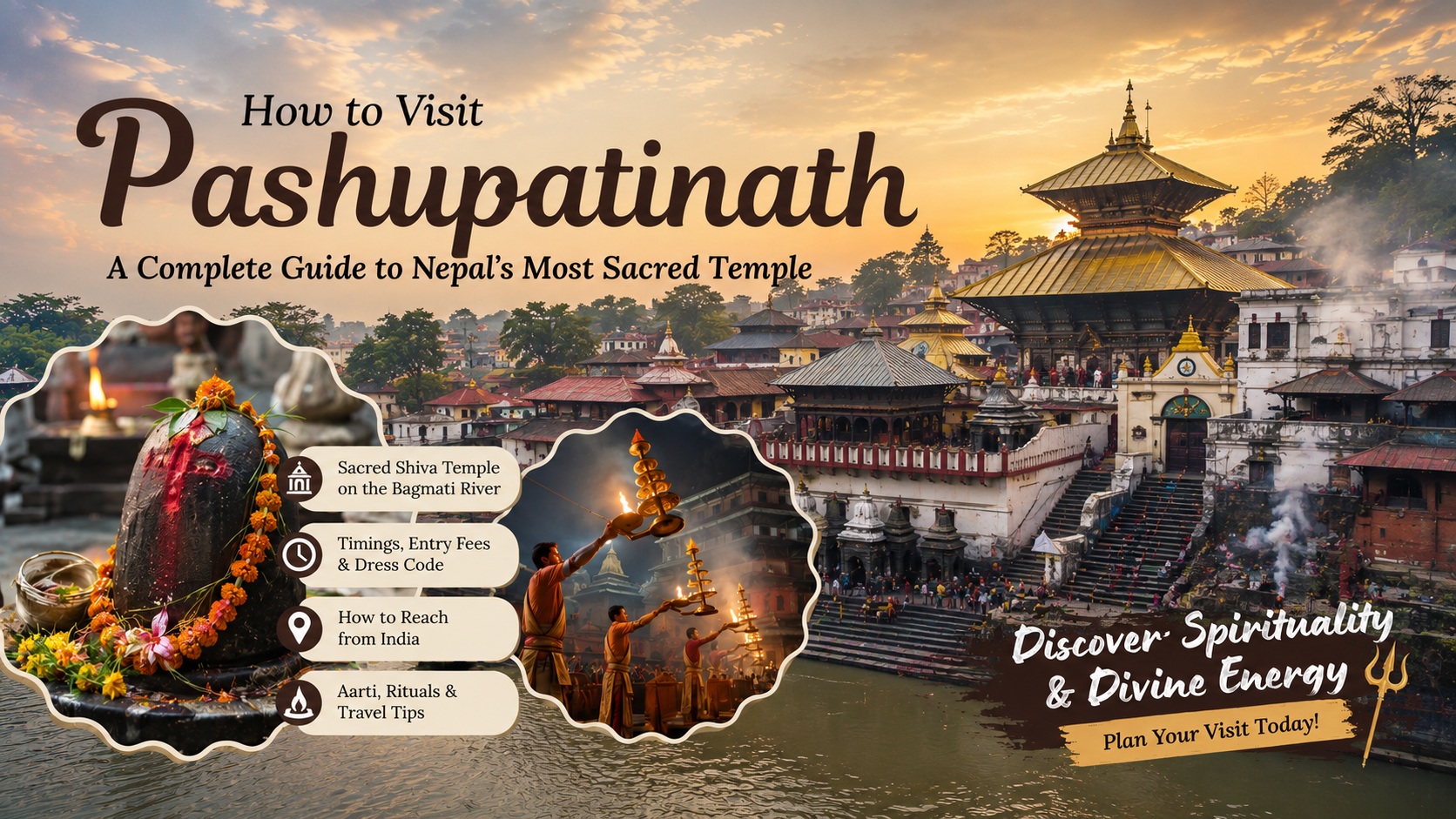
Pashupatinath Temple is one of the most sacred Hindu temples dedicated to Lord Shiva and a must-visit destination in Nepal. Located on the banks of the holy Bagmati River in Kathmandu, the temple attracts millions of devotees, pilgrims, and tourists every year. It is also recognized as a UNESCO World Heritage Site and is considered one of the most important pilgrimage sites for followers of Lord Shiva. Whether you are planning a spiritual journey, a family vacation, or a sightseeing tour of Kathmandu, visiting Pashupatinath Temple is an unforgettable experience. This guide explains everything you need to know—from the best time to visit and how to reach the temple to darshan timings, entry rules, nearby attractions, and helpful travel tips.
About Pasupatinath Temple
Pashupatinath Temple is believed to be over a thousand years old and is one of the holiest Shiva temples in the world. The main temple features beautiful pagoda-style architecture with intricately carved wooden doors and a golden roof. Inside the sanctum is the sacred four-faced Shiva Lingam, representing Lord Pashupati, the protector of all living beings. The temple complex consists of hundreds of smaller shrines, temples, ashrams, and ghats spread across both sides of the Bagmati River. It becomes especially vibrant during festivals such as Maha Shivaratri and Teej, when thousands of devotees gather to seek Lord Shiva's blessings.
Pashupatinath Temple History
Pashupatinath Temple is one of the oldest and most revered Hindu temples dedicated to Lord Shiva. Although the exact date of its construction is unknown, historical records suggest that the temple has existed since the 5th century CE, with references dating back even earlier. The present pagoda-style temple is believed to have been rebuilt during the 17th century by King Bhupatindra Malla after the original structure was damaged. According to Hindu mythology, Lord Shiva once took the form of a deer and wandered through the forests of the Kathmandu Valley. When the gods discovered him, one of his antlers broke and became a sacred Shiva Lingam. This divine Lingam is worshipped today as Lord Pashupatinath, meaning "Lord of All Living Beings."
The temple has long served as Nepal's most important Shaivite pilgrimage site and was designated a UNESCO World Heritage Site in 1979 as part of the Kathmandu Valley. Today, millions of devotees visit the temple every year, especially during Maha Shivaratri, when thousands of sadhus and pilgrims gather from Nepal, India, and around the world.
Where is Pashupatinath Temple Located?
Pashupatinath Temple is situated in Kathmandu, the capital city of Nepal. It is conveniently located near the city's major landmarks.
Approximate distances:
- Tribhuvan International Airport – 3 km (10 minutes)
- Thamel – 5 km
- Kathmandu Durbar Square – 6 km
- Boudhanath Stupa – 3 km
- Swayambhunath Temple – 8 km
Its central location makes it easy to include in a one-day Kathmandu sightseeing itinerary.
Best Time to Visit Pashupatinath Temple
Choosing the right season can make your visit more enjoyable.
Spring (March to May)
Spring offers pleasant weather with blooming flowers and clear skies. It is an excellent time for sightseeing and temple visits.
Monsoon (June to August)
The monsoon season brings heavy rainfall, making travel slightly challenging. However, the temple looks lush and beautiful during this period.
Autumn (September to November)
Autumn is considered the best season to visit Nepal. The weather is cool, the skies are clear, and the festive atmosphere enhances the spiritual experience.
Winter (December to February)
Winter is ideal for those who prefer fewer crowds. Carry warm clothing, especially for early morning and evening visits.
Best Time of Day
For a peaceful darshan, visit early in the morning between 5:00 AM and 8:00 AM. If you wish to witness the famous Bagmati River Aarati, plan your visit in the evening.
How to Reach Pashupatinath Temple
By Air
Tribhuvan International Airport is the nearest airport, located just 3 km from the temple. Taxis are readily available outside the airport.
By Road
Many Indian travelers enter Nepal through the Sunauli or Raxaul border and continue to Kathmandu by private cab, tourist bus, or domestic flight.
Popular routes include:
- Gorakhpur to Kathmandu
- Raxaul to Kathmandu
- Sunauli to Kathmandu
By Tour Package
Booking a Nepal tour package is one of the easiest ways to visit Pashupatinath Temple. A well-planned package usually includes transportation, hotel accommodation, sightseeing, and experienced drivers, making the journey comfortable and hassle-free. Travelers looking for a convenient experience can also explore Nepal tour options offered by Musafircab.
Temple Timings
The temple generally follows the schedule below:
- Opening Time: 4:00 AM
- Morning Darshan: 5:00 AM onwards
- Afternoon Break: Limited access during certain rituals
- Evening Aarati: Around sunset (timings may vary seasonally)
- Closing Time: Around 9:00 PM
It is always advisable to confirm the latest timings before your visit, especially during festivals.
Pashupatinath Temple Aarti Timing
One of the most spiritually uplifting experiences at Pashupatinath Temple is the Bagmati River Evening Aarti, performed daily on the banks of the sacred Bagmati River.
|
Ritual |
Timing |
|
Temple Opens |
4:00 AM |
|
Morning Darshan |
5:00 AM onwards |
|
Morning Puja |
8:30 AM – 11:00 AM |
|
Evening Bagmati Aarti |
6:00 PM – 7:00 PM (seasonal variations possible) |
|
Temple Closes |
Around 9:00 PM |
Highlights of the Evening Aarti
- Traditional Vedic chanting
- Devotional bhajans dedicated to Lord Shiva
- Priests performing synchronized rituals with large oil lamps
- Conch shell blowing and ringing temple bells
- Beautiful view of the illuminated Bagmati River
Travel Tip: Arrive 30–45 minutes before the Aarti to get a good viewing spot, especially during weekends and festivals.
Entry Rules and Visitor Information
For Indian Citizens
- No visa is required to enter Nepal.
- Carry a valid government-issued identity card.
- Hindus are permitted to enter the main temple.
For Foreign Tourists
Only Hindus are allowed inside the main sanctum. Non-Hindu visitors can explore the temple complex from designated viewing areas and enjoy its impressive architecture and cultural significance.
Dress Code and Temple Etiquette
To maintain the sanctity of the temple, visitors should follow these guidelines:
- Wear clean and modest clothing.
- Remove footwear before entering the temple.
- Avoid carrying leather items inside.
- Maintain silence and respect religious rituals.
- Photography is restricted inside the main temple.
- Follow instructions from temple authorities.
Respecting local customs ensures a peaceful experience for everyone.
Step-by-Step Darshan Process
If you are visiting for the first time, follow these simple steps:
- Reach the temple early in the morning.
- Deposit your shoes at the designated counter.
- Complete the security check.
- Purchase flowers, fruits, or other offerings from nearby shops if desired.
- Join the darshan queue.
- Offer prayers to Lord Pashupatinath.
- Spend some time exploring the temple complex.
- Attend the evening Bagmati Aarati if your schedule allows.
Popular Pujas and Rituals
Several religious ceremonies are performed daily at the temple.
Some popular rituals include:
- Rudrabhishek
- Jal Abhishek
- Maha Aarti
- Special Shiva Puja
- Shraddha and Pind Daan rituals
- Personal prayers and donations
Devotees can inquire at the temple office for details about booking special pujas.
Things to Carry
A little preparation can make your visit smoother.
Carry:
- Valid identity proof
- Cash in Nepali Rupees or accepted payment methods
- Comfortable walking shoes (to wear outside the temple)
- Water bottle
- Light snacks
- Umbrella during the rainy season
- Warm clothes during winter
Nearby Attractions
Since you are already in Kathmandu, consider visiting these nearby attractions.
Boudhanath Stupa
One of the world's largest Buddhist stupas and a peaceful place for meditation.
Guhyeshwari Temple
A revered Shakti Peeth located within walking distance of Pashupatinath Temple.
Kathmandu Durbar Square
A historic square showcasing Nepal's rich architecture and royal heritage.
Swayambhunath Temple
Popularly known as the Monkey Temple, it offers panoramic views of Kathmandu Valley.
Thamel
A lively tourist hub filled with restaurants, souvenir shops, and cafés.
Where to Stay Near Pashupatinath Temple
Accommodation options are available for every budget.
- Budget guesthouses for backpackers
- Mid-range hotels with modern amenities
- Luxury hotels offering premium services
- Dharamshalas for pilgrims seeking affordable stays
Booking your hotel in advance is recommended during peak travel seasons and festivals.
Can You Visit Pashupatinath on a Nepal Tour?
Yes. Pashupatinath can easily be included in a wider Kathmandu itinerary. Travellers who want organised transportation, accommodation and sightseeing can explore a Nepal tour package that includes Kathmandu and its major attractions. A planned itinerary can make it easier to combine the temple visit with nearby places such as Boudhanath, Guhyeshwari and Swayambhunath without spending too much time travelling between different parts of the city.
Food Options Near the Temple
Several restaurants and eateries are located close to the temple.
You can enjoy:
- Authentic Nepali cuisine
- Vegetarian meals
- Indian food
- South Indian dishes
- Tea, coffee, and local snacks
Many restaurants maintain hygienic standards and are suitable for families.
Useful Travel Tips
Keep these tips in mind for a smooth visit:
- Start your journey early to avoid long queues.
- Respect local traditions and religious customs.
- Keep your belongings secure in crowded areas.
- Hire licensed guides if you need detailed historical information.
- Stay hydrated, especially during summer.
- Avoid littering and help keep the temple premises clean.
One-Day Itinerary
6:00 AM: Reach Pashupatinath Temple
6:30 AM: Morning darshan
8:00 AM: Explore the temple complex
9:30 AM: Breakfast
10:30 AM: Visit Guhyeshwari Temple
12:00 PM: Explore Boudhanath Stupa
2:00 PM: Lunch
4:00 PM: Visit Thamel for shopping
6:00 PM: Return to Pashupatinath Temple for the evening Aarati
How Much Time Is Needed?
Depending on your schedule:
- Quick darshan: 1–2 hours
- Complete temple visit: 3–4 hours
- Temple plus nearby attractions: Full-day tour
Conclusion
A visit to Pashupatinath Temple is much more than a sightseeing trip—it's a deeply spiritual and cultural experience that reflects the heart of Nepal's religious heritage. From the sacred Shiva Lingam and the peaceful Bagmati River to the mesmerizing evening Aarati, every moment spent here leaves a lasting impression. Whether you are traveling from India or any other part of the world, planning your visit or choosing a well-planned Nepal Tour Package can help you enjoy a smooth, comfortable, and memorable journey. If you're exploring Nepal for several days, consider including destinations like Boudhanath Stupa, Swayambhunath Temple, Pokhara, and Lumbini in your itinerary to experience the country's rich spiritual, cultural, and natural beauty. With thoughtful planning, your visit to Pashupatinath Temple will become one of the most meaningful highlights of your Nepal journey, leaving you with lasting memories, inner peace, and a deeper appreciation of Nepal's timeless traditions.
Frequently Asked Questions
Can non-Hindus enter Pashupatinath Temple?
Non-Hindus are not allowed inside the main temple but can explore much of the surrounding temple complex from designated areas.
Is there an entry fee for Indian visitors?
Entry policies can change over time. It is advisable to check the latest guidelines before your visit.
What is the best time to visit?
October to November and March to May offer pleasant weather and are considered the best months for visiting.
Is photography allowed?
Photography is generally prohibited inside the main temple but may be permitted in certain outdoor areas.
How far is the temple from Kathmandu Airport?
It is approximately 3 kilometers away and takes about 10 minutes by taxi.
Is parking available?
Yes, parking facilities are available near the temple for private vehicles.
Are guides available?
Yes, licensed local guides can be hired to explain the temple's history and religious significance.