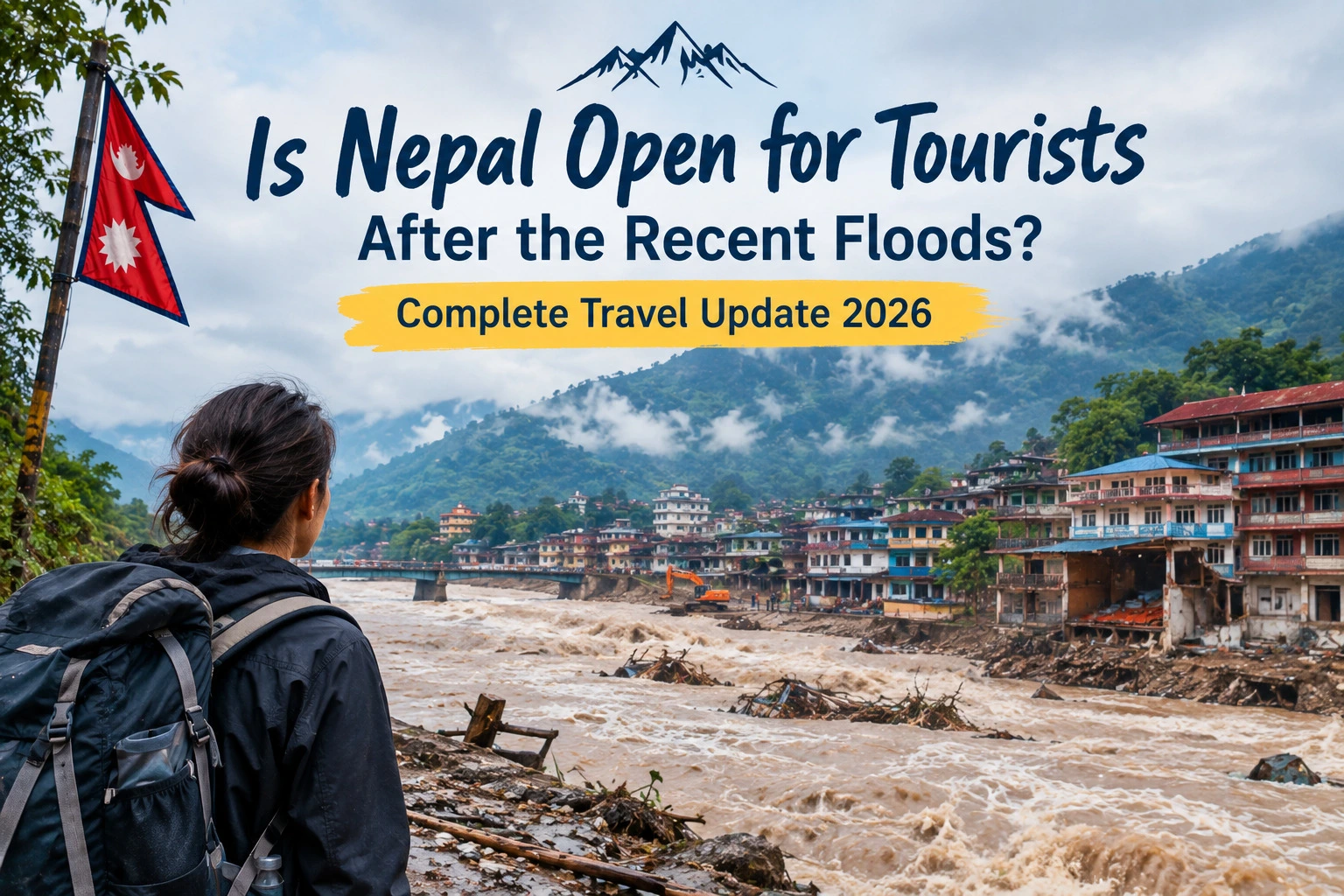
Nepal remains open to international tourists, but travel conditions are not the same across the country. Recent floods, landslides and heavy rainfall have affected several highways and mountain areas, creating temporary disruptions for road travellers and trekkers. Nepal's Ministry of Foreign Affairs has stated that the country remains open to international travellers and that the flooding has affected specific areas rather than the entire country. At the same time, travellers should not assume that every route is operating normally. As of 30 September 2026, continuous rainfall is still affecting roads in several districts, including Nuwakot, Rasuwa, Manang, Gulmi, Myagdi, Mustang, Nawalparasi East and Lamjung. For anyone planning a Nepal holiday in October or the coming weeks, the most important thing is to check the condition of the specific route and destination before departure. Travellers who prefer an organized trip can also explore a Nepal tour package based on their destination, travel dates and preferred transport.
Is Nepal Open for Tourists Right Now?
Yes, Nepal is open to tourists. There is no nationwide closure of tourism or a general ban on international visitors. However, some disaster-affected areas remain unsuitable for normal tourist travel. For example, the United States travel advisory currently recommends avoiding the Rasuwagadhi–Timure–Syafrubesi area of Rasuwa District because of flood damage, disrupted transportation and communications, ongoing recovery work, and the possibility of further flooding and landslides.
The current situation should be understood as:
- Nepal is open for tourism.
- Some roads and routes are temporarily disrupted.
- Certain disaster-hit areas should be avoided.
- Mountain trekking requires additional weather checks.
- Road conditions can change quickly after heavy rainfall.
- Travellers should confirm their route before starting the journey.
Therefore, “Nepal is closed” would not accurately describe the current situation.
What Happened in Nepal?
Nepal has experienced a series of serious flood and landslide events during the 2026 monsoon season.The major August disaster around the Bhote Koshi and Trishuli river systems caused extensive damage in northern Nepal. Nepal's Ministry of Foreign Affairs has been publishing situation updates concerning rescue, relief and the status of affected travellers.More recently, heavy rainfall in late September caused additional flooding, landslides and road blockages in different parts of the country. Nepal Police and local authorities have reported affected roads across numerous districts. The continuing rainfall is particularly important for travellers because even a road that was open earlier in the week can experience temporary restrictions after a landslide or road cave-in.
Are Kathmandu and Major Tourist Destinations Open?
The situation varies by destination and route.
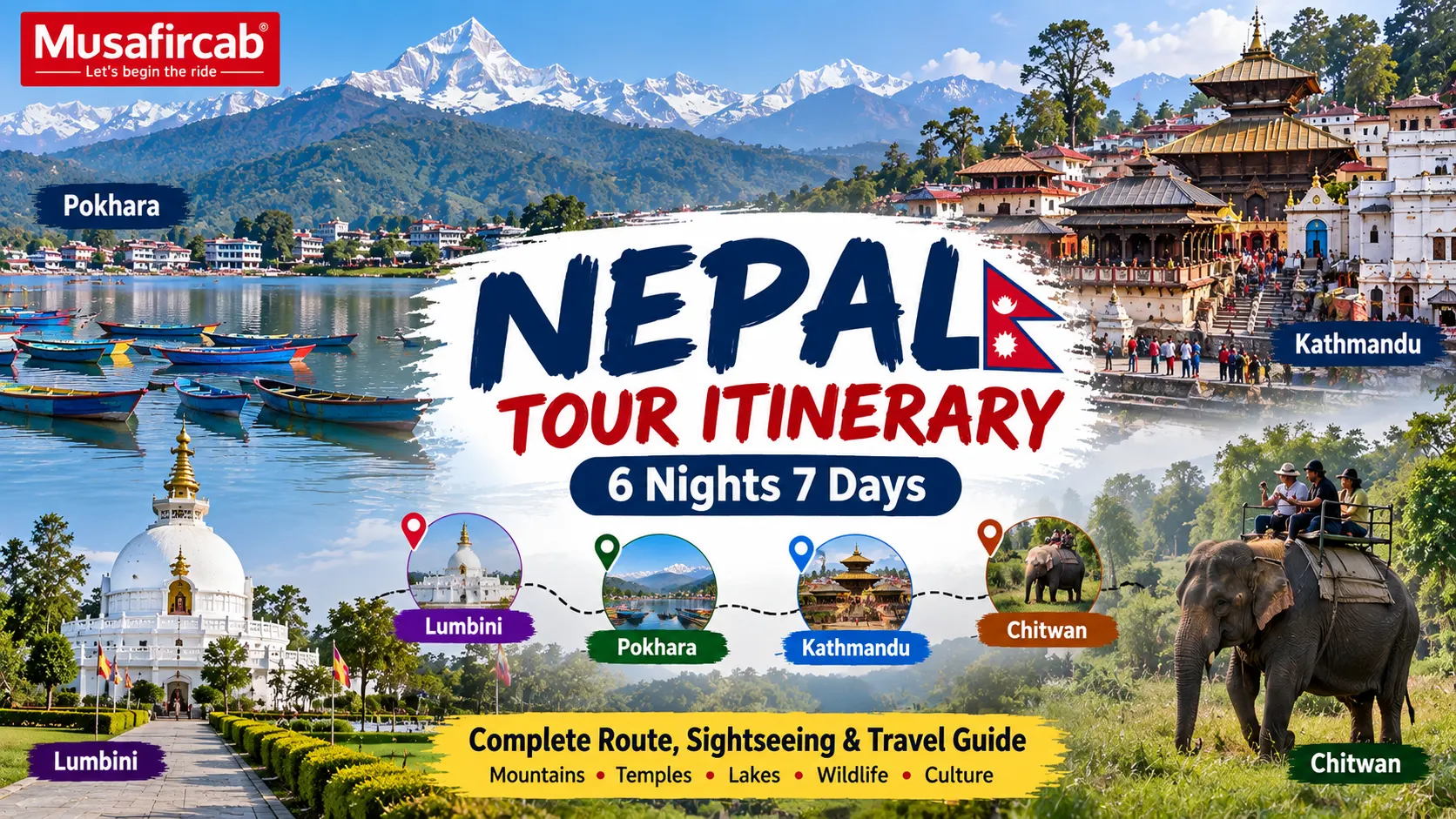
Kathmandu
Kathmandu remains an active tourist destination, with hotels, restaurants, heritage attractions and tourism services operating.
However, reaching Kathmandu by road can be more complicated when heavy rain affects highways. Recent rainfall has disrupted several major road links to the capital.
Travellers arriving by road should therefore check the latest highway situation instead of relying on an old itinerary.
Pokhara
Pokhara remains one of Nepal's major tourism destinations, but road conditions around the country can affect access.
On September 26, reporting indicated that the Mugling–Narayanghat and Pokhara corridor remained open, although conditions elsewhere on the road network were disrupted. Because road conditions can change rapidly after rainfall, travellers should verify the route shortly before departure.”
Conditions can change, so tourists travelling from Kathmandu or the Indian border should confirm the road situation shortly before departure.
Chitwan
Chitwan is another important tourist destination, particularly for travellers interested in wildlife and nature experiences.
However, Chitwan can be affected by wider highway disruptions because many visitors reach the area by road. Travellers should check the condition of the relevant highway before leaving Kathmandu or another city.
Lumbini
Lumbini in southern Nepal is an important pilgrimage destination and is geographically different from the flood-affected northern mountain corridor. The broader Terai and Lumbini tourism areas have continued to be identified separately from the severely affected northern corridors in tourism updates.
For Indian travellers planning a Lumbini trip from India, checking the border crossing and connecting road conditions remains important.
What About Nepal Road Trips from India?
Road travel is one of the biggest considerations for Indian tourists at the moment.
Travellers entering Nepal through the Sunauli–Bhairahawa border and continuing towards Lumbini, Pokhara or Kathmandu should check conditions for the complete route rather than looking only at the border status.
The reason is simple: an open border does not automatically mean that every road beyond the border is operating normally.
Before starting a road trip, check:
- Border crossing conditions
- Weather forecast
- Highway status
- Landslide or flood warnings
- Local traffic restrictions
- Hotel cancellation policies
- Alternative routes
- Current conditions at the destination
For travellers coming from Gorakhpur, Ayodhya, Lucknow or other parts of northern India, this is particularly relevant when planning a road-based Nepal tour package.
Are Roads in Nepal Open?
Some roads are open, while others have restrictions or temporary blockages.
Recent reports have documented disruptions affecting roads in Rasuwa, Nuwakot, Dhading, Kavrepalanchok, Chitwan, Manang, Baglung, Rolpa, Kalikot, Gulmi, Myagdi, Mustang, Palpa, Lamjung, Tanahun and other areas.
The situation is dynamic.
For example, the Prithvi Highway experienced serious disruption after landslides and flood-related damage, but authorities later restored traffic through a new track at the affected Krishnabhir section. Other portions remained subject to restrictions and road works.
This is why travellers should avoid using a single old road-status article as their only source of information.
Can You Travel from Kathmandu to Pokhara?
Travellers can still plan Kathmandu–Pokhara trips, but they should verify road conditions immediately before travelling.
The Kathmandu–Pokhara corridor has been affected by the wider monsoon situation at different times, although reporting has also confirmed sections of the route operating during periods when other highways were blocked.
If travelling by road:
- Start early where possible.
- Allow additional travel time.
- Keep some flexibility in the itinerary.
- Avoid travelling through visibly dangerous areas.
- Follow police and local administration instructions.
- Keep an alternative plan if weather deteriorates.
For a short Nepal holiday, adding a buffer day can be particularly useful during unstable weather.
What Is the Current Situation for Trekking in Nepal?
Trekking conditions are not the same throughout Nepal.
A flood or landslide affecting one region does not automatically mean that every trekking route is closed. However, current weather conditions mean trekkers should obtain region-specific information before setting out.
Mountain weather can change quickly, and heavy rainfall may lead to:
- Landslides
- Trail damage
- Flooded crossings
- Snowfall
- Road closures
- Flight delays
- Temporary evacuation or rescue operations
Travellers should check the specific trekking region rather than relying on a general statement about Nepal.
Latest Update for Manang and the Annapurna Region
Manang deserves particular attention in the current update.
Recent reports indicate that heavy rainfall and snowfall have disrupted travel in the Manang area, with tourists experiencing difficulties along parts of the Annapurna Circuit.
There has also been a recent avalanche incident in the Mount Himlung area of north-central Nepal, with severe weather hampering rescue operations.
For trekkers planning the Annapurna Circuit or other high-altitude routes, this means checking current conditions is essential.
Before leaving, confirm:
- Trail conditions
- Weather forecast
- Road access
- Local accommodation
- Flight status, if applicable
- Trekking operator updates
- Local authority instructions
Do not assume that conditions in Kathmandu or Pokhara accurately represent conditions at high altitude.
Should Indian Tourists Cancel Their Nepal Trip?
There is no single answer for every itinerary.
A traveller visiting Kathmandu, Lumbini or another destination on an unaffected route may face very different conditions from someone planning to enter a currently affected mountain corridor.
Instead of cancelling automatically, travellers should evaluate:
- Destination: Is your destination currently affected?
- Route: Are the roads or flights operating?
- Weather: Is heavy rain forecast during your travel dates?
- Flexibility: Can you change your route if necessary?
- Accommodation: Does your hotel allow date changes?
- Transport: Is your driver/operator monitoring current road conditions?
For package travellers, it is useful to confirm these details with the tour operator before departure.
Important Areas to Avoid
One of the clearest current warnings concerns parts of Rasuwa District, particularly the Rasuwagadhi–Timure–Syafrubesi area.
The current US State Department advisory says travellers should not enter this area because of flood damage, disrupted transport and communications, recovery operations and continued risk from flooding and landslides.
Travellers should also avoid:
- Closed roads
- Unstable slopes
- Damaged bridges
- Riverbanks during dangerous conditions
- Recently flooded areas
- Restricted trekking trails
- Areas under evacuation orders
Do not enter a disaster zone simply because a route appears on an old travel itinerary.
What Should You Check Before Travelling to Nepal?
A little preparation can make a significant difference during this period.
1. Check the weather
Look at the forecast for both your departure city and destination.
2. Check the road status
If travelling by road, confirm the condition of each major highway on your route.
3. Keep your itinerary flexible
Avoid scheduling every activity immediately after a long road journey.
4. Have an alternative
If a road becomes blocked, know whether a flight, alternate road or itinerary change is possible.
5. Stay away from rivers and unstable slopes
Heavy rainfall can rapidly increase river levels and trigger landslides.
6. Keep emergency contacts
Save your accommodation, transport operator and local emergency contacts before travelling.
7. Consider travel insurance
Travel insurance can be useful when a trip involves weather-related disruption, medical emergencies or evacuation. The current US advisory also recommends checking whether insurance includes medical evacuation coverage.
Is It a Good Time to Plan Nepal for October 2026?
October is traditionally an important month for Nepal tourism because the monsoon season normally gives way to the popular autumn travel period.
However, 2026 requires extra planning because of the recent disasters and continuing weather-related disruptions.
Recent reporting has shown that the floods and road disruptions have affected tourism businesses in Kathmandu, Pokhara, Chitwan and Lumbini just as the peak tourism period approaches. That does not mean the whole country is unavailable to tourists. It means travellers should make decisions based on their particular destination and route, rather than assuming conditions are uniform throughout Nepal.
Final Travel Update: Is Nepal Open?
Yes, Nepal is open to tourists in 2026.
However, the country is currently experiencing localized travel disruptions caused by floods, landslides, heavy rainfall and damaged roads. Nepal's government has stated that the country remains open to international travellers, while current foreign travel guidance also identifies specific disaster-affected areas that should be avoided.
For Indian travellers, Nepal remains accessible, but a road trip should be planned with current route information rather than relying on older travel content.
The safest approach is to check the latest weather, road and destination conditions shortly before departure and remain flexible if conditions change.
If you are planning Kathmandu, Pokhara, Lumbini, Chitwan or another popular destination, verify the specific route before leaving India. Current conditions can change quickly during periods of heavy rain.
Quick Summary
| Travel Question | Current Situation |
|---|---|
| Is Nepal open to tourists? | Yes, but conditions vary by location |
| Is the entire country affected? | No |
| Are some roads disrupted? | Yes |
| Can tourists visit Kathmandu? | Yes, with route and weather checks |
| Can tourists visit Pokhara? | Yes, but check the current road and transport situation |
| Can tourists visit Lumbini? | Generally accessible, but check the route before travelling |
| Is trekking operating everywhere? | No; conditions vary by region |
| Should flood-affected disaster areas be visited? | No |
| Should Indian road travellers check conditions before departure? | Yes |